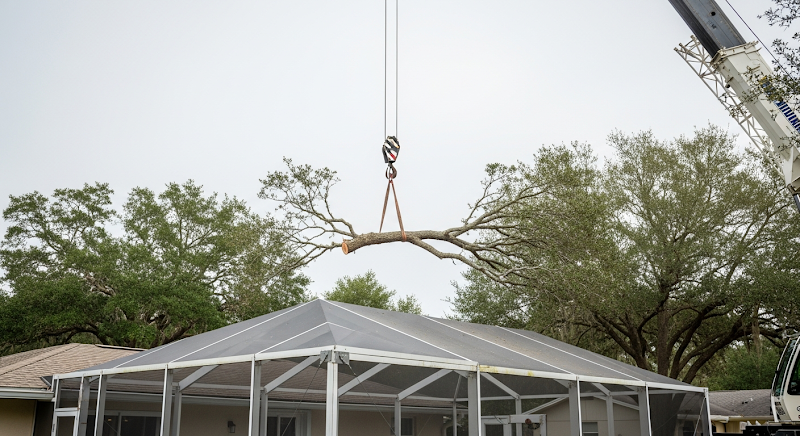
A mature live oak leaning over a screened pool cage, a dead pine wedged between two houses in College Park, or a storm cracked laurel oak hanging over a neighbor’s roof in Winter Park. These are the jobs where the standard climb and rig approach either slows to a crawl or becomes flat out dangerous. On the compact lots common across older Orlando neighborhoods, the crew at Regional Tree Care often reaches for a crane not as a luxury, but as the safest and most efficient way to lift wood out cleanly. Understanding when a crane makes sense helps you set realistic expectations before the truck ever pulls up.
What Makes a Lot Too Tight for Standard Removal
Standard tree removal relies on a climber ascending the trunk, then lowering cut sections with ropes and rigging blocks to a ground crew who processes and hauls the wood. That method works beautifully on open lots where there is a clear drop zone below the tree. The problem in Orlando is that many neighborhoods were platted decades ago with narrow side yards, and homeowners have since filled the remaining space with pools, lanais, pavers, and mature landscaping.
When the only drop zone is a six foot gap between a house and a fence, rigging every limb by hand becomes a slow, high risk operation. Each piece has to be small enough to control, which means more cuts, more time in the tree, and more chances for a swinging section to clip a soffit or crack a paver. A crane changes the math. Instead of lowering wood a few feet at a time, the operator picks whole sections and swings them over the obstacles to a landing zone in the street or driveway.
Several specific site conditions push a job from standard into crane territory:
- No usable drop zone beneath the canopy
- Structures like pool cages, sheds, or additions directly under limbs
- A dead or storm damaged trunk that cannot safely support a climber
- Overhead power lines threading through the branches
- Trees hanging over a neighbor’s roof or fence line
- Wet, unstable soil that will not hold heavy rigging loads
How Crane Assisted Removal Actually Works
The process starts long before any cutting. The crew sets up the crane on stable ground, usually the street or driveway, and calculates load charts based on the crane’s reach and the estimated weight of each section. A live oak limb the length of a car can weigh well over a thousand pounds, so those numbers are not guesswork. The operator and the climber, or a bucket operator, coordinate every pick with hand signals or radios.
Once the crane’s cable and rigging strap are secured to a section, the climber makes the cut. The crane takes the weight the instant the wood separates, so nothing free falls. The section swings up and out, clears the house or pool, and sets down gently in the landing zone where the ground crew cuts it into manageable pieces. This lift and place rhythm is why crane jobs on tight lots often finish faster than a fully rigged climbing removal, even though the setup looks more involved.
Precision at the cut face matters here, and it draws on the same skills our crews use for expert tree trimming on trees we intend to keep. Reading how a limb is loaded, where it will move when the fibers release, and how the canopy will react to the removal of weight is the difference between a controlled pick and a surprise. The crane removes the risk of the drop, but the human judgment on where and how to cut is still the core of the work.
The Safety Case for Cranes on Confined Sites
The most compelling reason to use a crane is not speed, it is worker and property safety. When a climber is tied into a compromised trunk over a screen enclosure, every rigging pull transfers force back into that trunk. On a dead pine that has been baking in Central Florida humidity, the wood can be brittle and unpredictable. A crane lets the climber work with the support of the cable, or eliminates the climb entirely when a bucket truck can reach the picks.
Property damage is the other constant threat on tight lots. A rigged section that slips can shatter roof tiles, punch through a pool cage, or take out an irrigation manifold. Insurance claims and repair costs from a botched removal often dwarf whatever a crane adds to the estimate. By lifting wood cleanly over the obstacles, the crane keeps the load path far away from anything fragile.
Before any of this begins, a careful evaluation of the tree and the surroundings sets the plan. A comprehensive tree risk assessment identifies decay pockets, cavity columns, lean, and structural cracks that tell us whether a climber can safely work the tree at all. That inspection often becomes the deciding factor in choosing crane assistance over the standard approach, because it reveals hazards you cannot see from the ground.
Common Orlando Scenarios That Call for a Crane
Storm season drives a lot of these calls. After a summer thunderstorm or a passing tropical system, we see oaks split at the union and pines snapped halfway up, with the broken top hung over a roof. A hung tree is under enormous stored tension, and sending a climber up to rig it by hand is exactly the situation cranes were built to avoid.
Removals Over Pools and Screen Enclosures
Aluminum pool cages are common across Orange County and they tear easily. A single dropped limb can collapse an entire panel and bend the framing. Lifting sections up and over the cage with a crane keeps the enclosure intact and avoids a second contractor and a second invoice. The same logic applies to lanais, gazebos, and glass patio doors.
Trees Wedged Between Homes
In neighborhoods where houses sit close together, a large tree in the side yard has nowhere to fall and no room to rig long pieces. The crane reaches over the rooflines, plucks each section vertically, and swings it to the street. What would be a two day rigging marathon becomes a controlled, predictable sequence.
Cost and Timing Factors to Understand
Crane work carries a higher hourly rate because you are paying for the machine, a certified operator, and a coordinated crew. That said, the total cost is not always higher than a difficult hand removal. A tree that would take a two person climbing crew a day and a half to rig out might come down in a half day with a crane, and the reduced labor hours offset much of the equipment cost.
Access is the variable that most affects price. If the crane can set up in the street with a clear line to the tree, setup is quick. If we need permits to occupy a roadway, or the only staging area is a narrow driveway with a low utility line, the plan gets more complex. Soft ground after Florida’s rainy season can also require mats to spread the crane’s load, which adds time.
For an accurate picture of what your specific tree and lot require, it helps to have a certified arborist walk the site and lay out the options in plain terms, and our professional tree removal services begin with exactly that kind of honest evaluation rather than a one size fits all quote. We will tell you when a standard removal is the smarter, cheaper choice and reserve the crane for the jobs that truly need it.
How to Prepare Your Property for a Crane Removal
A little preparation on your end keeps the job efficient. Clear vehicles from the driveway and street near the setup zone so the crane has room to deploy its outriggers. Move patio furniture, grills, and potted plants away from the drop zone. If you have an automatic gate or a sprinkler system near the staging area, point those out ahead of time so the crew can protect them.
Communication with neighbors matters too, since the crane’s boom may swing over a shared fence line and the landing zone might briefly occupy part of the street. Giving them a heads up prevents surprises and keeps the day running smoothly. Our crew handles the permitting and traffic control when a roadway setup is required, so that piece does not fall on you.
Working With the Right Crew Makes the Difference
A crane is only as good as the team running it. Matching the pick to the crane’s capacity, reading the tree’s structure, and choreographing the cut with the lift all take experience that generic outfits rarely have. The wrong crew with a crane can still damage your home if they misjudge a load or cut a section too heavy for the reach.
Local knowledge counts for a lot in Orlando specifically. Our crews know how live oaks, laurel oaks, pines, and camphor trees behave, how the region’s soils hold weight after rain, and which neighborhoods have the tight setbacks that force the crane decision in the first place. That familiarity translates into fewer surprises and a cleaner job.
If you have a large tree over a pool, a hung storm break, or a trunk wedged between structures, the safest next step is a site visit from a certified arborist who can confirm whether a crane is warranted. You can schedule an appointment today and we will assess the tree, the access, and the obstacles, then give you a clear plan and a straight estimate before any work begins.
The Bottom Line on Crane Assisted Removal
Crane assistance is not about upselling equipment, it is about matching the method to the site. On the open lots that still exist in outer Orange County, a standard climb and rig removal remains the practical choice. On the tight infill lots, storm damaged trees, and canopies hanging over pools and neighboring roofs that define so much of Orlando, the crane is often the answer that protects your property and the crew alike. Knowing the difference before you hire helps you ask the right questions and avoid the costly shortcuts that lead to damaged roofs and torn screen cages.
Frequently Asked Questions
Is crane assisted tree removal always more expensive than standard removal?
Not always. While the equipment carries a higher hourly rate, a crane can finish a difficult tight lot removal in a fraction of the time a hand rigged climb would take. The reduced labor hours often offset much of the machine cost, and it prevents property damage that could cost far more in repairs.
Can a crane reach a tree in my backyard if the street is the only setup spot?
Often yes. Cranes are chosen for their reach, and an operator can boom over rooflines and fences to pick sections from a backyard tree while staged in the street. Whether it works depends on the crane’s rated reach, the tree’s distance and weight, and clearance from power lines, which is why a site visit is needed to confirm.
How do I know if my tree needs a crane or a standard removal?
The main factors are whether there is a safe drop zone beneath the tree, whether the trunk is sound enough to support a climber, and what obstacles like pools, screen cages, or neighboring homes sit under the canopy. A certified arborist can evaluate all of this during an on site assessment and recommend the safest method.
Will a crane damage my lawn or driveway?
A properly set up crane spreads its load through outriggers, and on soft Florida ground the crew uses mats to protect the surface and distribute weight. When staged on a driveway or street, damage is rare when the setup is planned correctly for the crane’s size and the ground conditions.
Do you handle permits for road setup during a crane removal?
Yes. When a job requires occupying a roadway for crane setup or the landing zone, we manage the necessary permitting and traffic control so you do not have to coordinate that yourself. This is discussed during the estimate so there are no surprises on the day of the work.