A tree that stood straight last week and now tilts after a hard summer storm is telling you something has changed underground, and that change is usually the root plate, not the canopy. We see this pattern across Altamonte Springs every rainy season, especially from June through September when the ground stays saturated for days. The mistake we run into most often is the assumption that a good trim will fix a lean. It won’t. Trimming addresses weight and shape in the branches, while a sudden lean is almost always a stability problem starting at the base. At Regional Tree Care, owner Mike Denham and our crew walk a lot of yards after storms, and the first thing we look at is the soil around the trunk, not the limbs overhead.
Here’s the short version. If a tree develops a new lean after heavy rain, the roots on one side may have lost their grip in soft, waterlogged soil. Once that anchor fails, cutting branches can lighten the load slightly, but it does not put the roots back in the ground. The tree is now relying on a compromised foundation, and the next storm can finish what the last one started.
Leaning Is Not the Same as Growing Crooked
Plenty of trees in Central Florida grow with a natural lean and have done so for decades. A live oak that reaches toward open sunlight or a pine that bent years ago and kept growing upright from the bend is usually fine. Those leans are old, stable, and the tree has built reaction wood to support itself. The trunk stays straight above the bend, and there’s no disturbed soil at the base.
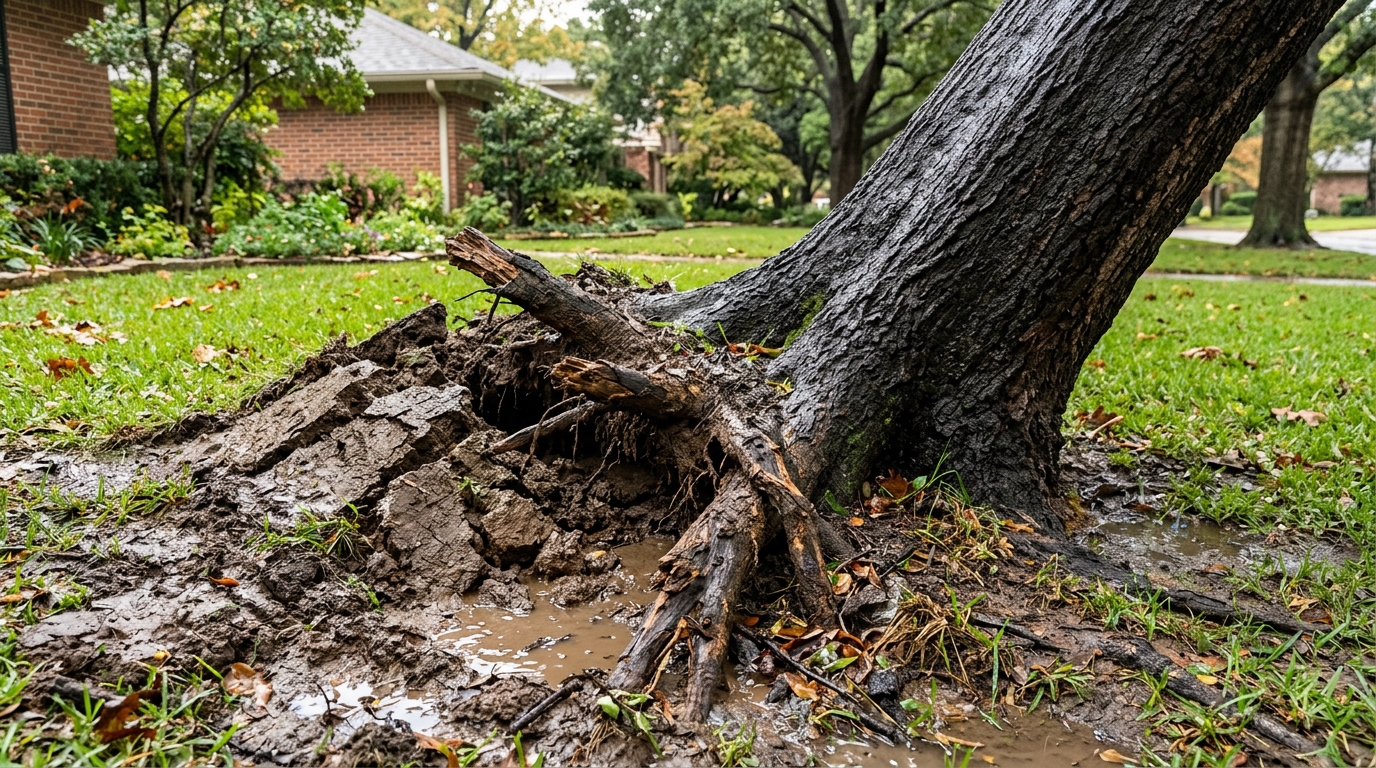
A storm lean looks different, and the clues are on the ground. You’ll often see the soil heaved up on the side opposite the lean, sometimes with a crack or a ridge forming in the lawn a few feet from the trunk. Roots may be lifting. The grass might be torn where the root plate rotated. That combination means the tree moved recently, and movement is the warning sign that matters most.
Signs of a Dangerous New Lean
- Soil mounding or heaving on the side away from the direction of the lean
- A fresh crack or ridge in the ground near the base of the trunk
- Exposed or lifted roots that were buried before the storm
- The lean increased after a storm or looks worse day to day
- Gaps opening between the trunk base and the surrounding soil
Signs a Lean Is Likely Old and Stable
- The lean has looked the same for years with no recent change
- Soil at the base is flat, settled, and undisturbed
- The trunk curves back toward vertical as it grows upward
- Established grass and groundcover grow right up to the trunk
Why Trimming Does Not Fix a Root Problem
Trimming is the right call when the issue is in the canopy. Overextended limbs, a heavy one sided crown, deadwood that could drop, or branches rubbing against a roof all respond well to a proper prune. Reducing weight high in the tree can lower wind resistance and take strain off weak unions. That work keeps healthy trees healthy and safer going into storm season.
What a trim cannot do is restore anchorage. Once the root plate shifts in soft soil, the mechanical connection between the tree and the ground is damaged. You can remove a third of the canopy and the tree will still be leaning on a failed foundation. Worse, aggressive over pruning to chase a lean can stress the tree, invite decay, and leave an unbalanced crown that behaves unpredictably in the next gust. We’d rather be honest about that than sell a cut that doesn’t solve the problem.
When the canopy genuinely is the concern and the base is sound, our expert tree trimming focuses on structural pruning that reduces risk without harming the tree’s long term health.
How Our Crew Decides Between Removal and Trimming
The decision comes down to what we find at the base and how far the tree has already moved. We start with the trunk flare and the soil, probe for soft or lifted roots, and check whether the lean is progressing. We look at the species too, because a water oak with early decay reacts very differently than a sound laurel oak. Then we factor in what sits under the tree. A lean over a driveway, a bedroom, or a power service line changes the math fast.
A careful evaluation up front saves you money and prevents the worst case, which is a trunk coming down on a roof at two in the morning. Our professional tree risk assessment gives you a clear read on whether a leaning tree can stay or needs to come out, with the reasoning spelled out so you’re not guessing.
When removal is the answer, the goal is to take the tree down without adding damage to what’s around it. A compromised root plate means the tree can shift or drop early during the work, so we rig and lower sections rather than free felling anything near a structure.
What Makes Altamonte Springs Storms So Hard on Trees
Our soils hold water, and our summer afternoons dump a lot of it in a hurry. Sandy upper layers drain fast, but the clay and fill underneath can turn to mush after three or four days of consecutive storms. Add a late day thunderstorm with 40 mile per hour gusts and a canopy full of wet leaves, and you’ve got real leverage working against roots that are already sitting in soft ground.
Certain trees around here are more prone to this. Water oaks and laurel oaks grow fast and often hide internal decay. Slash pines develop shallow roots in the wrong spot. Trees planted too close to a slab or hemmed in by hardscape never spread a full anchoring root system, so they tip more easily. If any of those describe your yard, a new lean after rain deserves a look sooner rather than later.
What to Do the Moment You Notice a Lean
First, treat the area as unsafe and keep people and vehicles out from under and around the tree, especially on the side it’s leaning toward. Don’t park there. Don’t let kids play near the base. A tree with a failing root plate can move with no warning, and the ground near the roots can give way further.
Resist the urge to prop it, cut it, or strap it yourself. People get hurt trying to stabilize a leaning tree, and a half measure can make the failure sudden instead of gradual. Take a few photos from a safe distance so you can show how the lean looked right after the storm, which helps document any change over the following days.
- Stay out of the fall zone and keep others away
- Move cars, grills, and anything valuable out from under the canopy
- Photograph the lean and the base soil for reference
- Watch for increasing lean, new cracks, or more root lift
- Have it evaluated before the next round of storms
When Heavy Equipment Makes Removal Safer
Some leaning trees sit in tight spots where climbing or dropping pieces would risk a roof, a fence, or a pool cage. A big oak leaning toward a two story house over a screen enclosure is a good example. In those cases we bring in a crane so we can lift sections straight up and set them in the drop zone instead of lowering them through the canopy. It keeps weight off the compromised trunk and keeps the crew out of a tree that can’t be trusted to hold.
Our safe tree removal services cover both straightforward takedowns and the complicated leaners, and when the site calls for it we use crane assisted removal to protect your property and our people. The method we pick depends on the lean, the target underneath, and how much we trust what’s left of the root plate.
Can a Leaning Tree Ever Be Saved
Sometimes, yes, and we’d rather save a healthy tree than cut it. A young, small tree that tipped slightly in soft ground can occasionally be straightened and staked if the roots are mostly intact and the trunk is sound. The window for that is short, and it only works on trees small enough that the root system can reestablish. A mature tree with a shifted root plate is a different story. The larger the tree, the more weight rides on that anchorage, and a big tree rarely rebuilds enough support to be safe again.
The honest math usually favors removal once a sizable tree has a fresh, progressing lean over something you care about. We’ll tell you plainly which bucket your tree falls into instead of pushing one answer.
Getting Ahead of It Before the Next Storm
The best time to deal with a questionable tree is before the rain softens the ground again. Thinning a dense crown, removing deadwood, and clearing weak limbs on sound trees reduces the sail effect that pushes marginal root systems past their limit. Spotting early decay or a weak base gives you time to plan a removal on your schedule instead of in an emergency.
If you’ve got a leaning tree now or trees you want checked before hurricane season ramps up, schedule an appointment today and we’ll come look, tell you what we see, and lay out your real options. Storm preparation work done early is far cheaper and safer than cleanup after a trunk lands where it shouldn’t.
A lean that showed up overnight is the yard’s way of flagging a problem you can still get in front of. Catch it while it’s a decision and not an emergency, and you keep control of the outcome.
Frequently Asked Questions
My tree started leaning after one big storm. Does that mean it has to come out?
Not automatically, but a lean that appeared suddenly after heavy rain is a red flag because it usually points to root plate movement. The size of the tree, how much it’s moved, and what sits under it all matter. The safest step is a risk assessment before the next storm so you know whether it’s stable enough to keep or needs removal.
Why can’t you just trim the leaning side to balance the tree?
Trimming changes weight in the canopy, but a storm lean is a foundation problem at the roots. Removing branches does not put the root plate back in the ground, and heavy pruning to chase a lean can stress the tree and leave an unbalanced crown. We only trim when the base is sound and the real issue is in the limbs.
How can I tell an old lean from a dangerous new one?
Look at the soil. An old, stable lean has flat, settled ground at the base and a trunk that often curves back toward vertical. A dangerous new lean shows heaved or cracked soil on the opposite side, lifted roots, and a lean that keeps getting worse over days.
Is it safe to leave a leaning tree standing for a few weeks?
It depends on whether the lean is progressing and what it could hit. A tree with a failing root plate can come down with little warning, so keep people and vehicles out of the fall zone and get it evaluated quickly, especially if more rain is in the forecast.
Which Altamonte Springs trees lean most often after rain?
Fast growing water oaks and laurel oaks that hide internal decay, shallow rooted slash pines, and any tree planted too close to a slab or hardscape tend to tip in saturated soil. If your yard has those, a new lean deserves prompt attention.
Why would a leaning tree need a crane to remove?
When a leaning tree sits over a house, fence, pool cage, or other target, a crane lets us lift cut sections straight up and out instead of lowering them through the canopy. That keeps weight off a weakened trunk and keeps the crew out of a tree that can’t be trusted to hold.